


Gum Disease
(Gingivitis & Periodontitis)
Trusted by 600+ patients since 2025.
What Is Gum Disease?
Gum disease is inflammation or infection of the gums caused by plaque and tartar buildup, starting as gingivitis (an early stage that’s still fully reversible) and, if left untreated, may progress to periodontitis (a more serious stage that affects the bone and structures supporting the teeth).
Signs & Symptoms Of Gum Disease

Bleeding Gums While Brushing
Healthy gums shouldn't bleed during normal brushing — this is usually an early sign of gum inflammation (gingivitis).

Visible Or Noticeable Tartar
A hardened tartar buildup on the tooth surface that can't be removed by brushing alone.

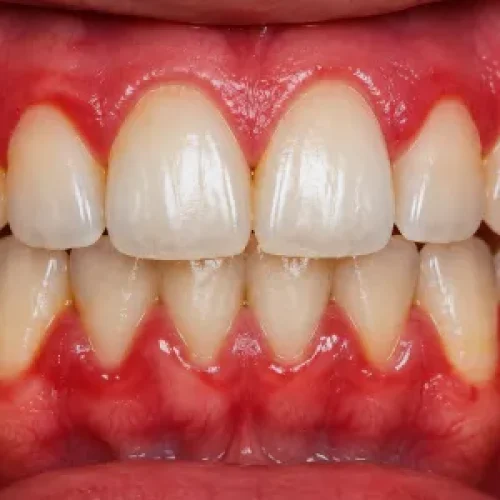
Swollen Or Red Gums
Healthy gums are pale pink — redness or swelling indicates ongoing inflammation.
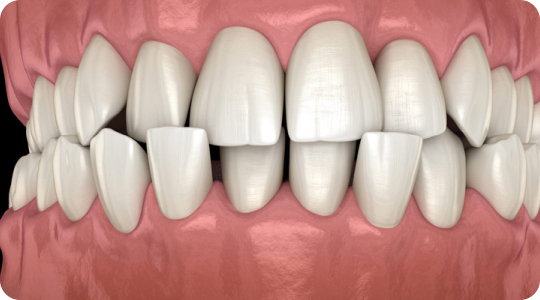
Receding Gums (Teeth Appearing Longer)
Receding gums expose the tooth root, making teeth appear longer — a sign gum disease has been present for some time.
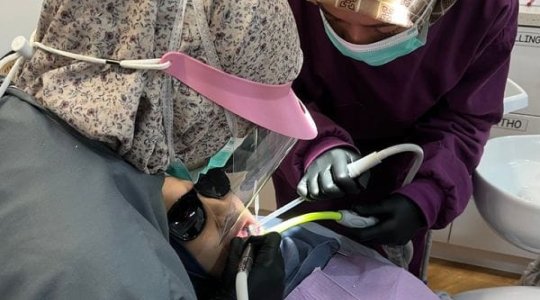
Effects If Gum Disease Is Left Untreated
Supporting Bone May Shrink
Untreated gum disease may spread to the bone supporting the teeth, causing it to gradually shrink and weaken tooth support.
Teeth May Become Loose And Fall Out
Continued damage to the tooth’s supporting structure may cause teeth to become loose, and in more advanced cases, fall out before their time. An early dentist assessment can help determine the damage level and most suitable treatment option.
Treatment May Become More Complex
Early-stage gingivitis can be reversed with regular scaling, but advanced periodontitis may require more complex treatment and more recovery sessions.
When Should You See A Dentist?
Get an examination if you notice:
- Bleeding gums while brushing or eating
- Persistent gum swelling, redness, or sensitivity
- Clearly visible tartar on your teeth
- Teeth starting to feel loose
Every gum disease case differs in severity — the dentist will assess your gum condition and recommend the most suitable treatment after examination.
Treatment Options For Gum Disease
Gentle Scaling & Polishing
Clean plaque and tartar buildup above and below the gumline to restore gum health — the primary treatment recommended for gingivitis and as periodic maintenance for all gum disease patients.
Why Choose Aesira Dental Clinic?
Open 9AM – 9PM
Most dental clinics close early. You can book your appointment even after work hours.
Pain-Free, Fear-Free
Receive treatment with minimal discomfort no need to feel anxious.
0% Instalment — 24 Months
Don't let cost hold you back. Pay in flexible, interest-free monthly instalments.
Licensed & Trusted Dentists
All our dentists are certified and registered under the Malaysian Dental Council (MDC).
600+ Five-Star Reviews
Aesira Dental Clinic is trusted by 600+ patients in Kajang and surrounding areas.
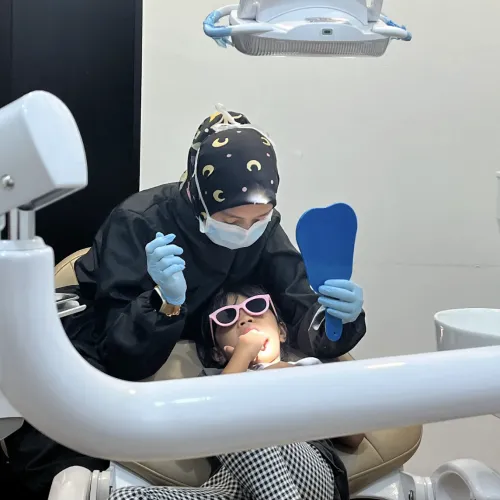
Child-Friendly Dental Clinic
Our dentists are experienced in keeping children calm and comfortable during treatment.
Dr. A'tikah U'zied
Dental Surgeon
Dr. A’tikah U’zied is a Dental Surgeon at Aesira Dental Clinic Kajang with a special interest in preventive dentistry, paediatric dentistry, and cosmetic treatments. She is known for her gentle approach and commitment to making every visit comfortable.
Registered with the Malaysian Dental Council (MDC No. 13130), Dr. A’tikah provides evidence-based dental care for patients of all ages.
Related Problems
FAQ Gum Disease
What's the difference between gingivitis and periodontitis?
Gingivitis is an early stage of gum inflammation that’s still fully reversible with proper treatment, while periodontitis is a more advanced stage that has affected the bone and structures supporting the teeth — early detection makes recovery easier.
Is it normal for gums to bleed while brushing?
No, healthy gums shouldn’t bleed during normal brushing. This is usually an early sign of gum inflammation (gingivitis) that needs to be assessed by a dentist for suitable treatment.
Can scaling fully treat gum disease?
For early-stage gingivitis, regular scaling is usually enough to restore gum health. For more advanced cases, the dentist will assess the need for additional treatment after a thorough examination.
How often should I get scaling to avoid gum disease?
Scaling is recommended every 6 months for most patients, though the actual frequency depends on your gum condition — the dentist will recommend the most suitable schedule based on your examination.
Why do my gums look like they're receding and my teeth appear longer?
Receding gums can be a sign of gum disease that has been present for some time, exposing the tooth root and making it more sensitive — an examination is needed to assess the severity and suitable recovery options.
Aesira Dental Clinic Location
- 8, Jalan Reko Sentral 8, Reko Sentral, 43000 Kajang, Selangor
- 011-5897 1137
-
Mon–Sat: 9AM – 9PM
Sun: 9AM – 6PM